
Pasco Juvenile Release Boundary
Pasco Regional Juvenile Detention Center, also listed by DJJ as Pasco Juvenile Detention Center, is a secure youth facility. It serves Pasco County youth who are waiting for court dates or placement. DJJ operates the center. Pasco County Corrections does not, and the Florida Department of Corrections adult prison system does not.
That boundary controls every record question. Do not type a youth’s name, birth date, case number, or custody facts into an adult inmate portal, a public people-search box, or a state-prison offender search. Do not post those facts in a message seeking help. Adult tools cannot validate a youth release and may create a false or harmful match. The correct route depends on an authorized relationship to the youth and the order governing the case.
The Florida DJJ detention-center directory identifies the Pasco center and explains the role of detention centers.
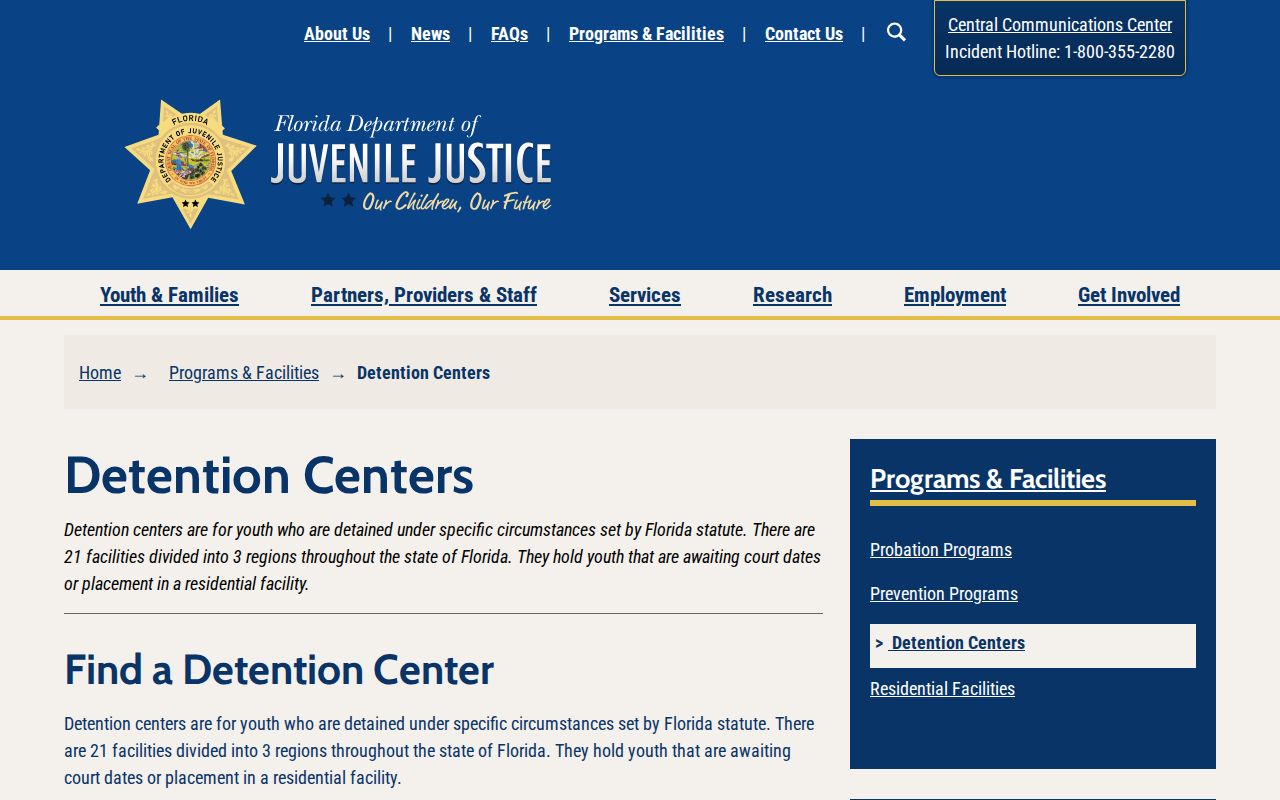
The directory view reinforces the system boundary: it routes readers to DJJ facility information without exposing a youth record.
Pasco Juvenile Release Paths
A youth may leave secure detention in several ways. Release can be to a parent or legal guardian. A court may order supervised release, direct the youth to another placement, or commit the youth to a residential program. A move from detention to placement is not the same as an unrestricted return home. The court order and DJJ case information control the destination and conditions.
| Possible youth path | Authorized source |
|---|---|
| Release to parent or guardian | Guardian, counsel, DJJ, and the governing court order |
| Supervised release | DJJ case staff and counsel for terms and reporting |
| Court-directed placement | Juvenile court order and assigned DJJ staff |
| Residential commitment | DJJ placement information shared with authorized parties |
The phrase “released” therefore needs context. It can mean the secure detention phase ended while another form of state care, supervision, or placement began. It should not be translated into adult-jail terms such as bond history, prison discharge, or adult probation. Those systems use different laws, records, and agencies.
An authorized person should ask a direct, narrow question: Has secure detention ended, what order controls the next step, and which assigned official can confirm compliance? That approach protects the youth and produces a more reliable answer than searching public adult records.
Pasco Juvenile Records Stay Protected
Florida Statutes section 985.04 governs confidentiality and access for juvenile justice records. Juvenile information does not become an adult public inmate record merely because a detention event ended. Court access rules and other laws can add further limits. The lawful audience may include the youth, authorized guardian, counsel, DJJ, the juvenile court, and other entities allowed by law, depending on the record and purpose.
The official Florida juvenile-records confidentiality statute is the source for the access boundary.
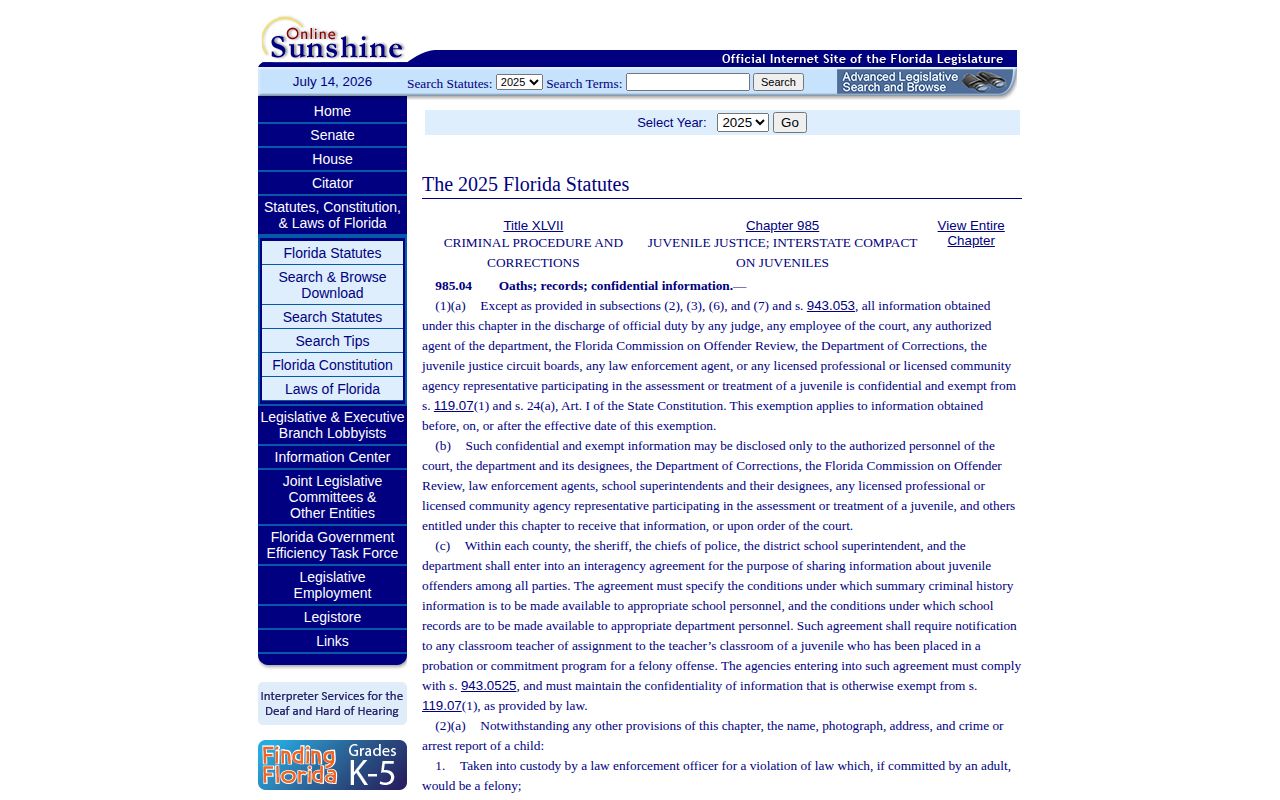
The statute view supports a cautious rule: disclose no youth identity or case detail unless the receiving person and access channel are authorized.
- Confidential record
- Information whose access is limited by law, rule, or court order.
- Guardian
- A person with legal authority for the youth, subject to the case and governing law.
- Supervised release
- A court- or agency-directed step outside secure detention with stated terms.
- Placement
- A court- or DJJ-directed setting that may follow detention and is not unrestricted release.
Do not copy, summarize, or publish a protected record. Even a small set of facts can identify a youth in a local community. A safe public explanation names the agency, facility role, general process, and contact channel without naming a child or describing a case.
Adult Searches Are Wrong
The Pasco Corrections In Custody and Past Arrests routes are for the county adult jail. They are not DJJ tools. A missing youth name there proves nothing. The FDC Corrections Offender Network covers adult state-prison and state community-supervision records. It also cannot confirm a youth’s Pasco detention release.
VINELink coverage depends on the reporting agency and the particular record. It should not be used to hunt for protected youth data or as a substitute for the authorized juvenile process. Likewise, the BOP and ICE locators concern federal or immigration custody, not ordinary DJJ detention. Searching all of them can multiply false matches without answering the juvenile question.
| Public system | Why it is wrong for a Pasco youth case |
|---|---|
| Pasco Past Arrests | Adult county booking archive |
| FDC Offender Search | Adult state corrections and supervision database |
| BOP Inmate Locator | Federal imprisonment system |
| ICE ODLS | Current immigration detention locator |
A person who later enters an adult system may have a separate adult record governed by that system. That does not authorize publication of an older protected juvenile matter. Keep each custody event and legal regime separate. The correct question is not “Where can a name be found?” It is “Which authorized official may confirm this youth’s current court-directed status?”
Pasco Juvenile Release Contacts
DJJ lists the Pasco Juvenile Detention Center at 28534 State Road 52, San Antonio, Florida 33576. The published telephone number is (352) 588-5900, and the fax number is (352) 588-5909. These details identify the facility and provide a routing contact. They do not create public access to a youth’s name, custody status, release event, or destination.
Pasco Regional Juvenile Detention Center28534 State Road 52
San Antonio, FL 33576
(352) 588-5900
Fax: (352) 588-5909
Florida DJJ facility directory
An authorized caller should explain the relationship to the youth and ask how to reach the assigned case contact or counsel. Staff may require verification and may decline to confirm any person-specific fact. Respect that process. Never send protected details by ordinary email, a public contact form, or an unverified third-party message channel.
For a court order, use counsel or the juvenile court’s approved access method. The clerk may have different public and authorized views. A general courthouse search should not be used to reconstruct confidential facts. If an agency directs the caller to a different office, retain the name and role of that office and continue through official channels.
Request Pasco Youth Information Safely
A request should contain only what the official recipient needs. First confirm that the phone number, address, or portal belongs to DJJ, counsel, or the juvenile court. Then follow the recipient’s identity-check process. Do not send a broad narrative. Do not include facts about other youth, victims, witnesses, medical needs, school records, or family matters unless the authorized official expressly requires them through a secure channel.
Ask for process before substance. A useful opening is: “What proof of authority is required, and what secure method should be used?” After the office confirms access, ask for the specific order, date, or status needed. This protects the youth while reducing the chance that the request reaches the wrong unit.
- Use a verified DJJ, counsel, or juvenile-court contact.
- Provide proof of identity and legal authority as requested.
- Share the least amount of identifying information needed.
- Use the secure method named by the authorized office.
- Do not republish any case-specific response.
Public-record concepts that apply to adult jail material cannot simply be carried into a juvenile case. Florida law specifically protects juvenile information, and a court order may create added limits. The safest record is one obtained by the right person, from the right custodian, through the right protected channel.